Daytime freedom
Lenses are removed in the morning after gently reshaping the cornea overnight.
 Book appointment
 Myopia management
Orthokeratology uses specially designed lenses during sleep to temporarily reshape the cornea, supporting clear daytime vision without glasses or contacts.
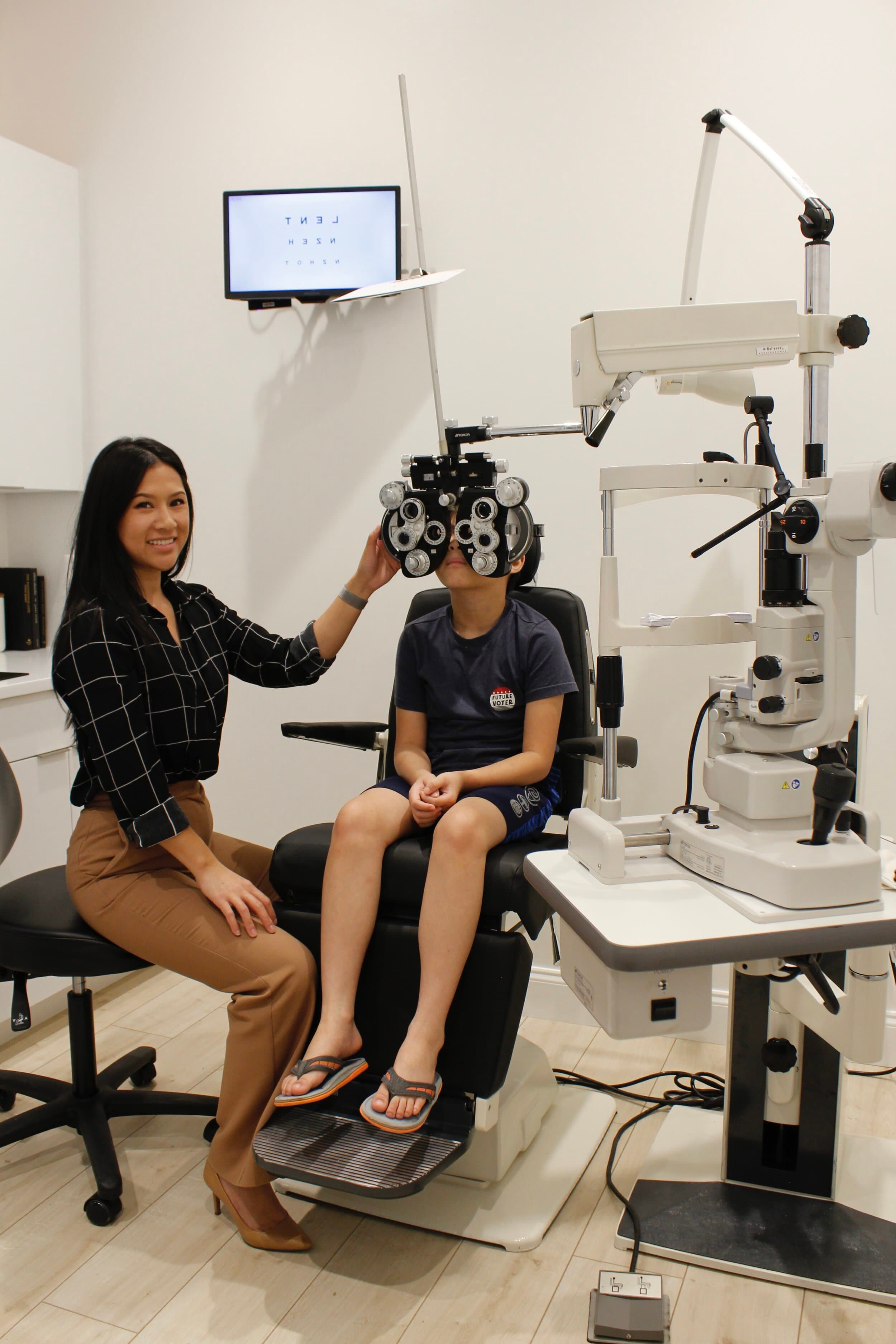
Lenses are removed in the morning after gently reshaping the cornea overnight.
Ortho-K may be considered as part of a plan to manage nearsightedness progression.
The cornea gradually returns toward its original shape when lens wear stops.
How it works
Corneal topography guides a gas-permeable lens design that changes how tears distribute pressure across the eye. The effect is temporary and requires consistent overnight wear.
The fitting
Your evaluation includes eye health, prescription, corneal shape, and lifestyle. Follow-up visits check vision, lens position, corneal response, and care technique.
Good habits matter
Cleaning, disinfecting, hand hygiene, and attending follow-up visits are essential. Dr. Nim will discuss whether Ortho-K is appropriate for you or your child.
Frequently asked questions
Yes, when properly fitted and cared for. Ortho-K uses FDA-approved gas-permeable lenses worn overnight, with follow-up visits to check corneal health, lens fit, and response along the way. Good lens hygiene and attending scheduled check-ups are essential to keeping it safe.
There isn't a strict minimum age — candidacy depends on eye health, prescription, and whether your child can reliably handle lens insertion, removal, and care with adult supervision. Many families start Ortho-K in the school-age years as part of a myopia management plan.
The effect is temporary. If you stop wearing the lenses consistently, the cornea gradually returns toward its original shape and your uncorrected vision returns to how it was before treatment.
Coverage varies by plan, and Ortho-K is sometimes considered elective. Our team will review your specific benefits and discuss the costs involved before you begin treatment.
Your next step
Book an Ortho-K fitting to review candidacy, goals, and expected follow-up.
View live availability