Ghosting and distortion
An irregular corneal surface can cause doubled images, streaks, glare, and halos, especially at night.

Keratoconus care
Keratoconus thins and reshapes the cornea into an irregular cone, which can make vision blurry, doubled, or streaky—even with new glasses. Specialty contact lenses are designed for exactly that kind of eye.
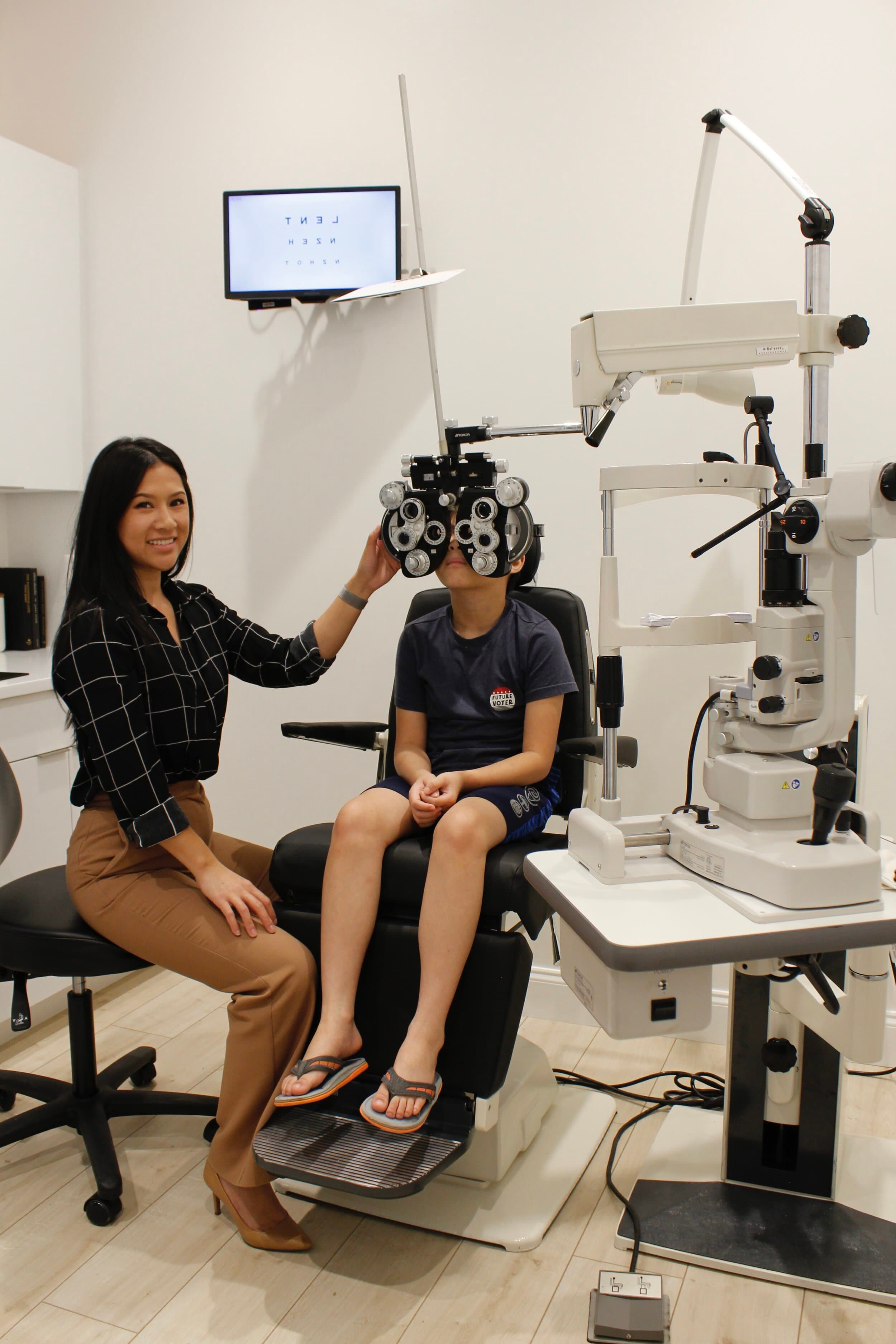
An irregular corneal surface can cause doubled images, streaks, glare, and halos, especially at night.
Frequent prescription changes, or glasses that never feel quite right, can be an early sign worth evaluating.
Scleral and other specialty lenses create a smooth optical surface over the irregular cornea.
Why glasses fall short
Glasses and standard soft lenses follow the shape of the cornea underneath them, so an irregular surface can still blur or double what you see. A specialty lens replaces that uneven front surface with a smooth one, which is why it can often provide clearer, more stable vision.
Your evaluation
Your visit starts with detailed imaging of the cornea and the white of the eye. Those measurements guide lens selection, and the design is refined over follow-up visits until vision and comfort work together.
Lens options
Depending on your corneal shape, eye health, and daily needs, options may include scleral lenses, custom soft lenses, or other specialty designs. Scleral lenses vault over the cornea and rest on the white of the eye, so they do not rub against the most irregular area.
Protecting the cornea
Specialty lenses improve how you see, but they do not stop keratoconus from progressing. Corneal cross-linking is a separate procedure, performed by a corneal surgeon, that aims to slow progression. If your measurements suggest your cornea is changing, Dr. Nim will discuss whether a cross-linking consultation makes sense.
What to bring
Bring your current glasses, any contact lenses and cases you use, prior corneal maps or eye records, and a list of situations where your vision is hardest, such as night driving or screen work.
Frequently asked questions
For many patients, yes. Specialty contact lenses such as scleral lenses are a common non-surgical way to restore clearer vision. Whether they are right for you depends on your corneal shape, eye health, and goals, which your evaluation will clarify.
Glasses can only correct regular focusing errors. As the cornea becomes more irregular, it creates distortions that glasses cannot fully correct, so vision may stay blurry even with an updated prescription.
Many patients find them comfortable after a short adjustment period because the lens rests on the white of the eye rather than the sensitive cornea. Comfort varies from person to person, and follow-up visits are used to refine the fit.
Specialty lenses and corneal cross-linking do different jobs. If there are signs that your keratoconus is progressing, Dr. Nim can talk with you about whether seeing a corneal surgeon about cross-linking is appropriate.
Coverage varies with your diagnosis and plan. Some medical plans provide benefits for specialty lenses when they are medically necessary. Our team will review your benefits and discuss costs before you begin.
Your next step
Dr. Nim will review your corneal measurements, current lenses, and visual symptoms to recommend a lens approach that fits your eyes.