Irregular optics
Corneal mapping helps reveal the shape changes behind visual distortion.
 Book appointment
 Complex cornea care
After LASIK, PRK, RK, or other corneal procedures, some people experience glare, halos, ghosting, or vision that shifts throughout the day.
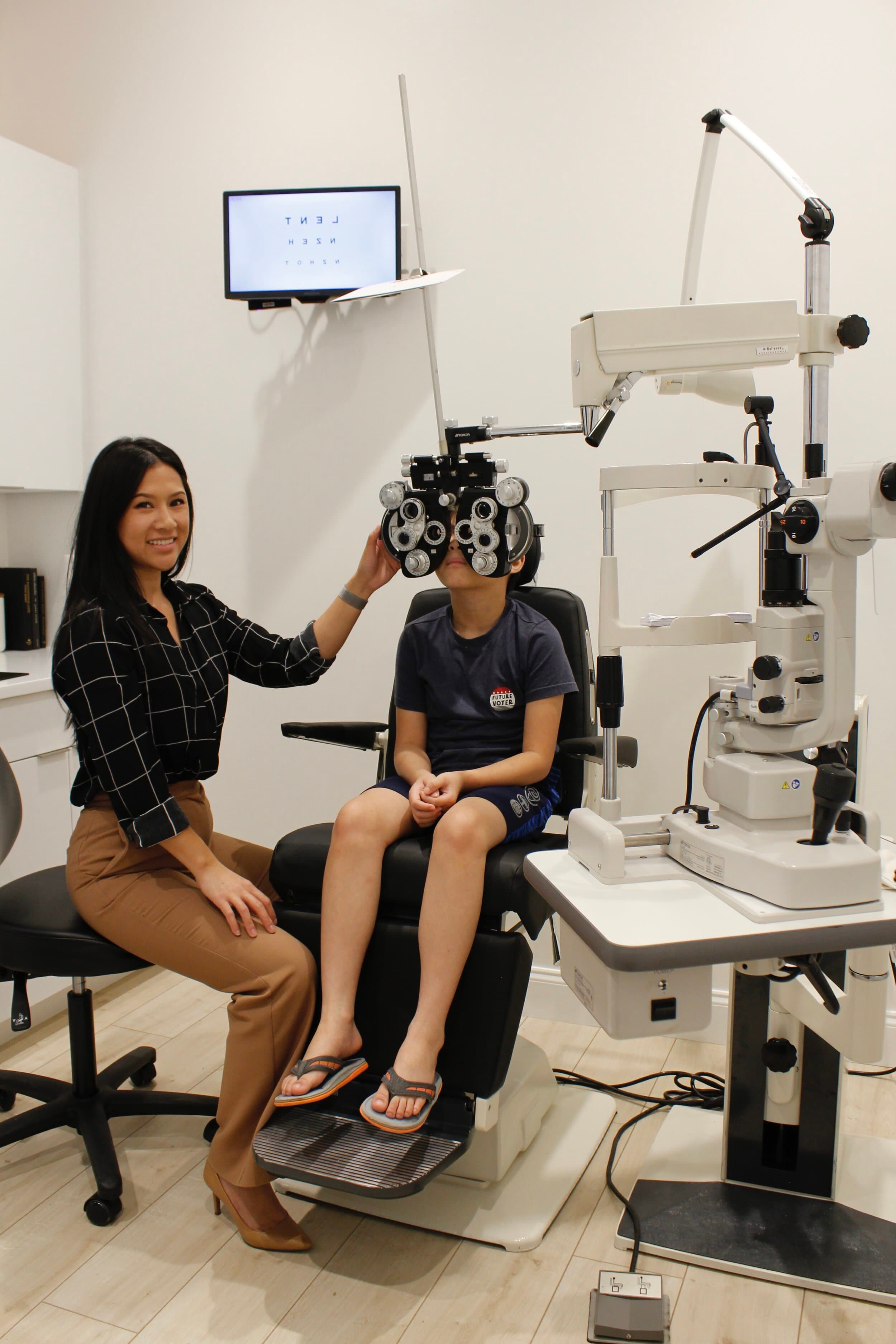
Corneal mapping helps reveal the shape changes behind visual distortion.
A stable lens surface may provide more consistent focus than glasses alone.
Lens design and ocular surface health are considered together.
Why vision can change
Corneal surgery can leave a surface that is difficult to correct with ordinary lenses. Advanced mapping shows how curvature varies across the eye and helps guide the next step.
Specialty options
A scleral or other specialty contact lens may mask irregularities by creating a smooth refractive surface in front of the cornea. Suitability depends on your eye health, measurements, and visual goals.
Bring context
Bring surgical records if available, along with your current glasses, contact lenses, and a description of when your vision is best or worst.
Frequently asked questions
Corneal surgery reshapes the eye, but it can leave a surface that is difficult to correct with an ordinary prescription. Even small irregularities in that surface can scatter light and cause glare, halos, or fluctuating clarity — especially at night.
Sometimes glasses help, but they cannot correct an irregular corneal surface the way a specialty contact lens can. Corneal mapping shows exactly where the shape varies, which helps determine whether glasses, a specialty lens, or another approach is the better fit.
Yes. Scleral lenses vault over the cornea entirely and rest on the white of the eye, so they do not put pressure on the surgical site. They are commonly used for post-surgical eyes that need a smoother, more stable optical surface.
It depends on your procedure and healing timeline. If your vision has stabilized but you're still experiencing glare, halos, or fluctuating clarity, it's reasonable to schedule an evaluation — Dr. Nim will review your surgical history and current symptoms to determine next steps.
Your next step
Schedule a scleral lens or complex-cornea evaluation with Dr. Nim.
View live availability